The herds
A loop, not a date
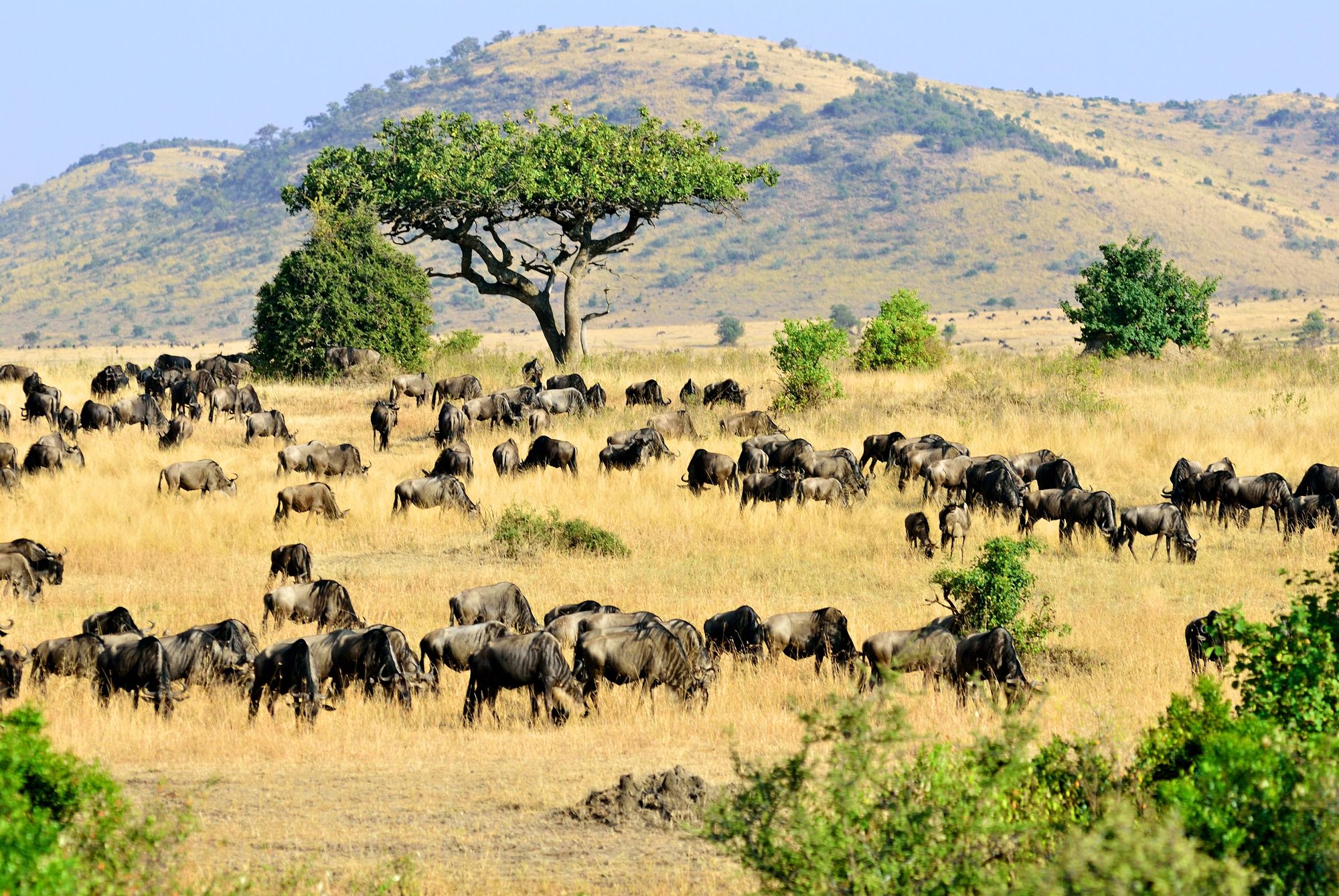
The migration runs all year and spends most of it in Tanzania. Kenya gets one stage of it, usually between July and October — and nobody controls exactly when.
| Months | Where | What is happening |
|---|---|---|
| January – March | Southern Serengeti, Tanzania | Calving. Kenya does not have this stage. |
| April – June | Central and western Serengeti, Tanzania | Moving north and west with the grass |
| July | Northern Serengeti, first herds into the Mara | The first Mara River crossings, usually mid-month |
| August | Masai Mara and northern Serengeti | Crossings at their most likely, in both directions |
| September | Masai Mara | Herds settled in the Mara; crossings still frequent |
| October | Masai Mara, beginning to move south | Crossings become less likely as the month goes on |
| November – December | Returning through the Serengeti | Largely back in Tanzania with the short rains |
What the calendar cannot tell you
The herds follow grass, and grass follows rain. That is the whole mechanism. When the rain moves, so do they — and in a year when the rains come early or fail, the dates above shift by weeks.
A river crossing is even less predictable than the herds’ position. Wildebeest can mass on a bank for a day and walk away. They can cross twice in a morning at a place nobody expected. Being in the Mara in the last week of August makes a crossing likely; it does not make it certain, and no operator on earth can change that.
If you see a crossing guaranteed anywhere, that is a marketing claim rather than a factual one. We will tell you the odds for your dates and we will not dress them up.
How to improve your odds
- Give it three nights, not two. The single biggest change you can make. Two nights is one and a half real days.
- Go in the second half of August or the first half of September if the crossing is the point.
- Stay somewhere that can reach the river early. Crossings often happen mid-morning, and being an hour away means you watch it end.
- Consider a conservancy with reserve access — the vehicle limits are better and you can still drive into the reserve for the river.
- Have a second reason to be there. The resident cats are extraordinary regardless of whether the wildebeest perform.
The months people get wrong
| Belief | Reality |
|---|---|
| "The migration is in the Mara for most of the year." | Roughly three to four months, in a good year. |
| "We will see the calving." | Calving happens in the southern Serengeti, in Tanzania, in the early part of the year. |
| "July guarantees crossings." | The first herds usually arrive in July. Crossings are far more reliable in August and September. |
| "The Mara is not worth visiting outside the migration." | The resident lion, cheetah and leopard are there all year, with far fewer vehicles. |
The other way round
If the crossing is the point, work backwards from it
Most trips get planned forwards: pick dates, then pick places. If a river crossing is genuinely the reason you are coming to Kenya, invert that. Fix the Mara nights first, in late August or early September, and build the rest of the itinerary around them.
That usually means booking a long way ahead — the small camps within reach of the river go early — and being willing to take the shoulder of the window rather than its exact middle.
- Fix the Mara nights before anything else
- Three nights minimum, four if you can
- Book six to twelve months ahead for peak-season camps
- Put the quieter parks before or after, not in the middle
More from our Kenya guides
Specialist guides across our Kenya network
Each of these is a focused guide we publish. Same Kenya specialist behind every enquiry.
Ready to turn this into a real itinerary?
Send us your dates, who is travelling and roughly what you want to spend per person per night. Our Kenya specialist comes back within 24 hours with a plan built around them and a costed quote.